
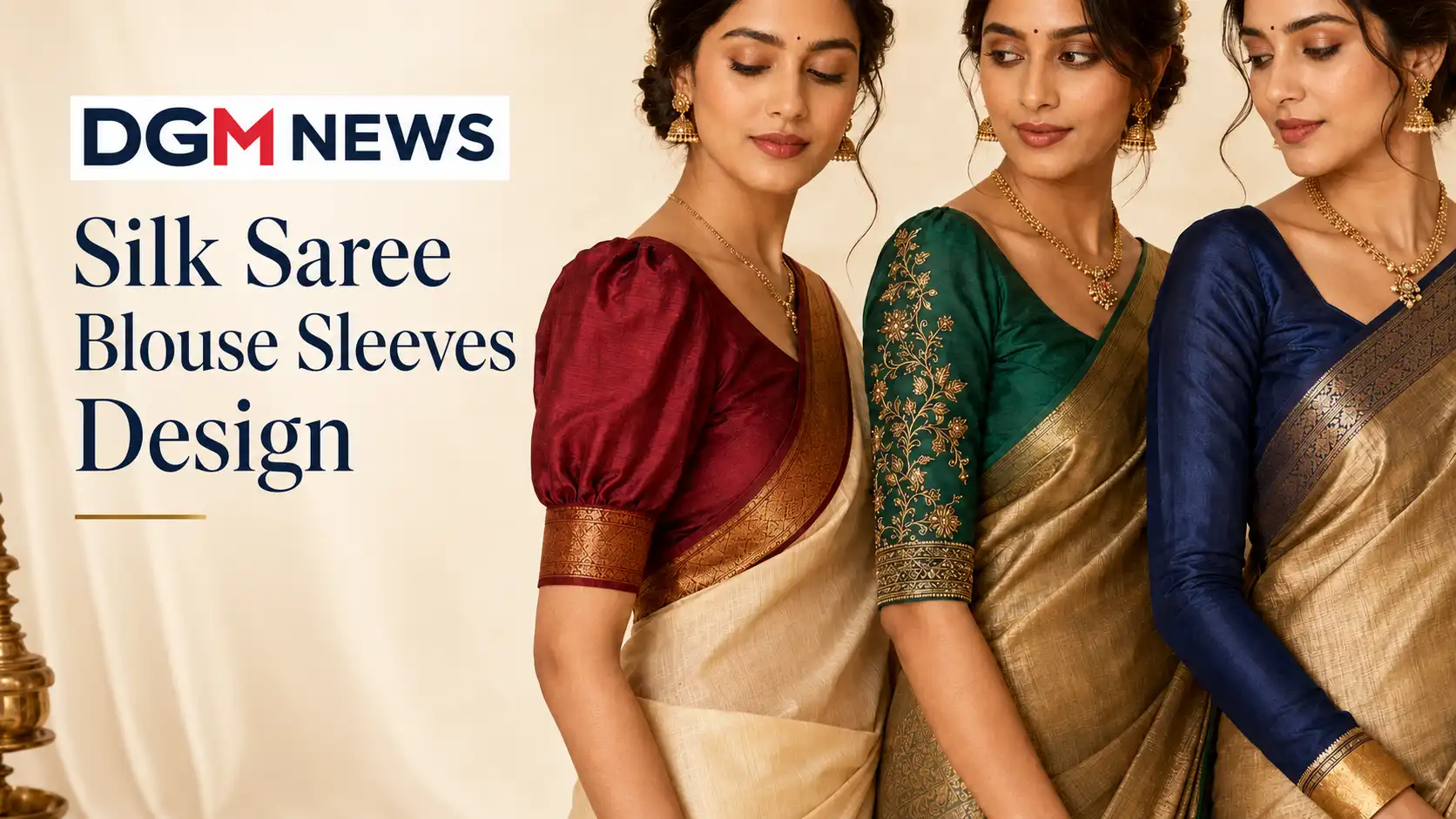

A silk saree creates a rich and graceful look, but the blouse determines whether the complete outfit feels traditional, modern, or bridal. In particular, the sleeves influence the blouse’s balance, comfort, and level of detail. The right silk saree blouse sleeves design should complement the saree border, suit the occasion, and allow easy arm movement.
You do not need the heaviest embroidery to make a blouse look special. A well-placed border, a neat puff, a flattering sleeve length, or a small cutwork detail can be enough. The following ideas cover timeless and contemporary choices for Kanjeevaram, Banarasi, Mysore silk, Paithani, raw silk, soft silk, and other silk sarees.
How Sleeve Design Changes the Look of a Silk Saree
Sleeves occupy a small area, yet they sit close to the face, jewellery, and pallu. This makes them highly visible in photographs. Short fitted sleeves create a clean traditional appearance. Elbow-length sleeves provide more space for borders and handwork. Full or sheer sleeves produce a formal look, while puff, bell, or petal sleeves add shape and personality.
15 Silk Saree Blouse Sleeves Designs to Consider
1. Classic Short Sleeves With a Zari Border
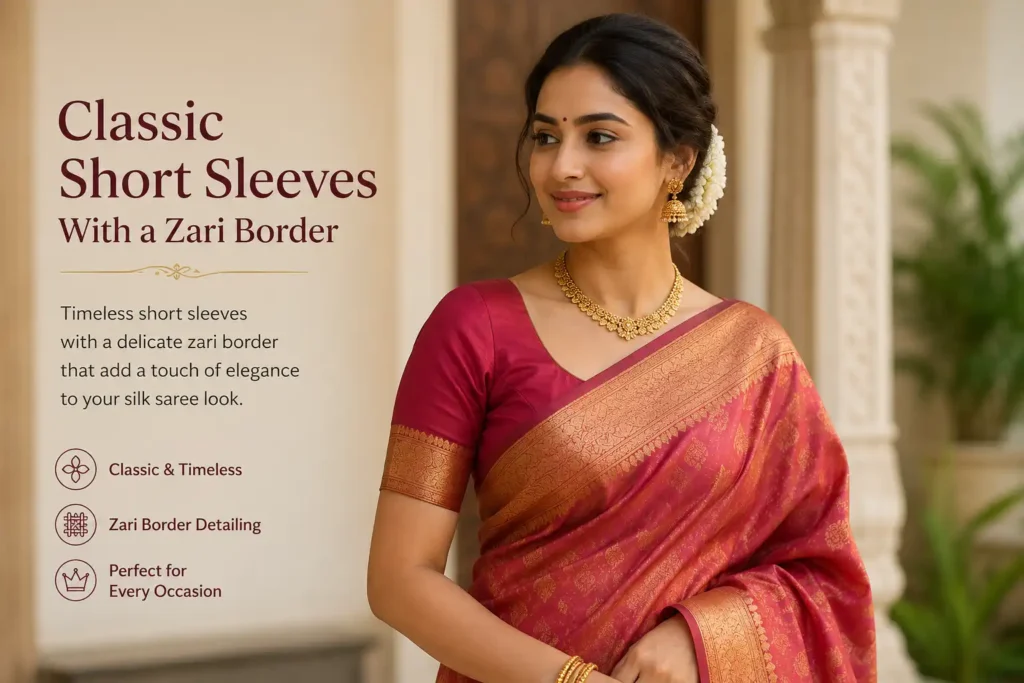
Short sleeves finished with the saree’s zari border are a dependable choice for traditional silk sarees. The repeated border connects the blouse to the saree without additional decoration.
This design works especially well for temple visits, family functions, and festivals when you want an authentic, uncluttered appearance. It is also a practical option if the saree already has a broad border or heavily decorated pallu.
2. Plain Elbow-Length Sleeves
An elbow-length sleeve gives a silk blouse a polished outline and offers comfortable coverage. Keep it plain when the saree has a broad border, dense motifs, or heavy pallu work.
A narrow piping at the sleeve end can add definition without competing with the saree. This sleeve length also provides enough room for movement while maintaining a structured appearance.
3. Elbow-Length Sleeves With a Broad Border
If the saree border is the main attraction, use part of it near the sleeve hem. Place the motif symmetrically on both arms and check its direction before cutting.
This style looks particularly graceful with Kanjeevaram, Paithani, Gadwal, and other with distinctive woven borders. However, avoid adding heavy embroidery above the border because it may make the sleeve appear crowded.
4. Traditional Puff Sleeves
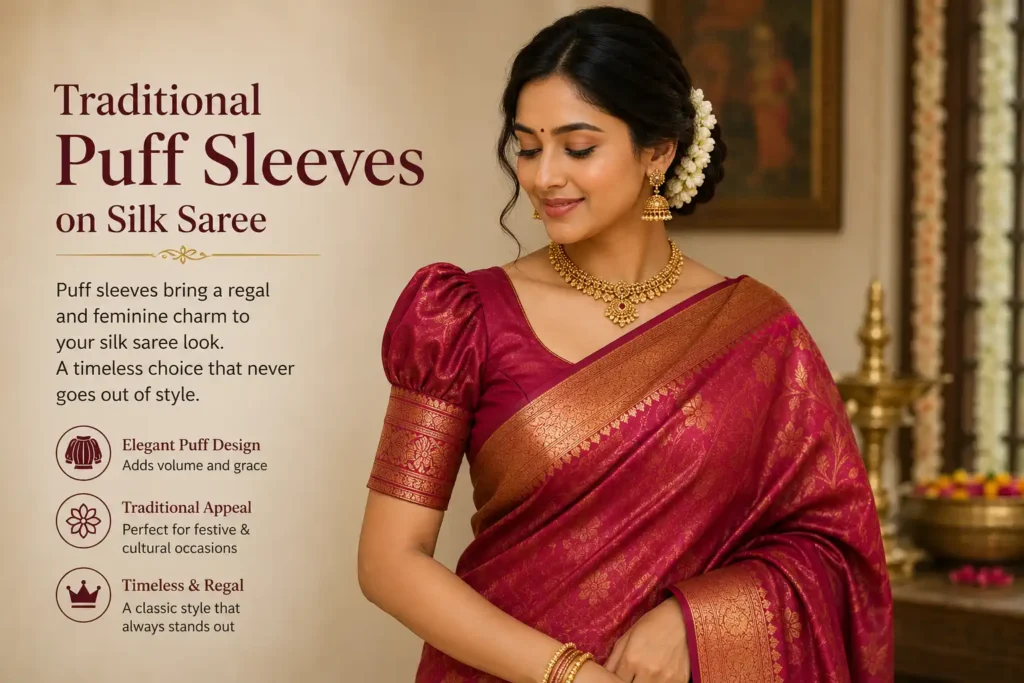
Small puff sleeves create a soft, festive silhouette and suit many pattu and soft silk sarees. Keep the gathers controlled so the shoulder does not become bulky.
A fitted band with zari piping or a narrow border gives the puff a neat finish and helps it retain its shape. Small puffs usually pair better with structured silk than extremely large or loose gathers.
5. Elbow-Length Puff Sleeves
This design combines volume near the shoulder with a longer fitted section below it. It offers more drama than a small puff while retaining a traditional character.
Use lighter lining and moderate gathers because thick silk, heavy embroidery, and excessive volume together can make the sleeve stiff. This style works well for weddings, engagement ceremonies, and festive family events.
6. Three-Quarter Fitted Sleeves
Three-quarter sleeves create a long, elegant line and work well in cooler weather or for evening functions. They suit plain silk, brocade, and contrast blouses.
Leave enough room near the elbow for bending the arm. Also ensure that the sleeve end does not interfere with bangles, bracelets, or a watch. A narrow zari cuff can complete the design without adding unnecessary weight.
7. Full Fitted Sleeves
Full sleeves give a silk saree a formal, regal appearance. A plain fitted version balances a heavily woven saree, while embroidered cuffs can dress up a simple one.
Fit is crucial. The sleeve should follow the arm without pulling across the elbow, armhole, or shoulder. Consider adding a small opening near the wrist if the fabric has no stretch and the cuff is narrow.
8. Sheer Net Full Sleeves
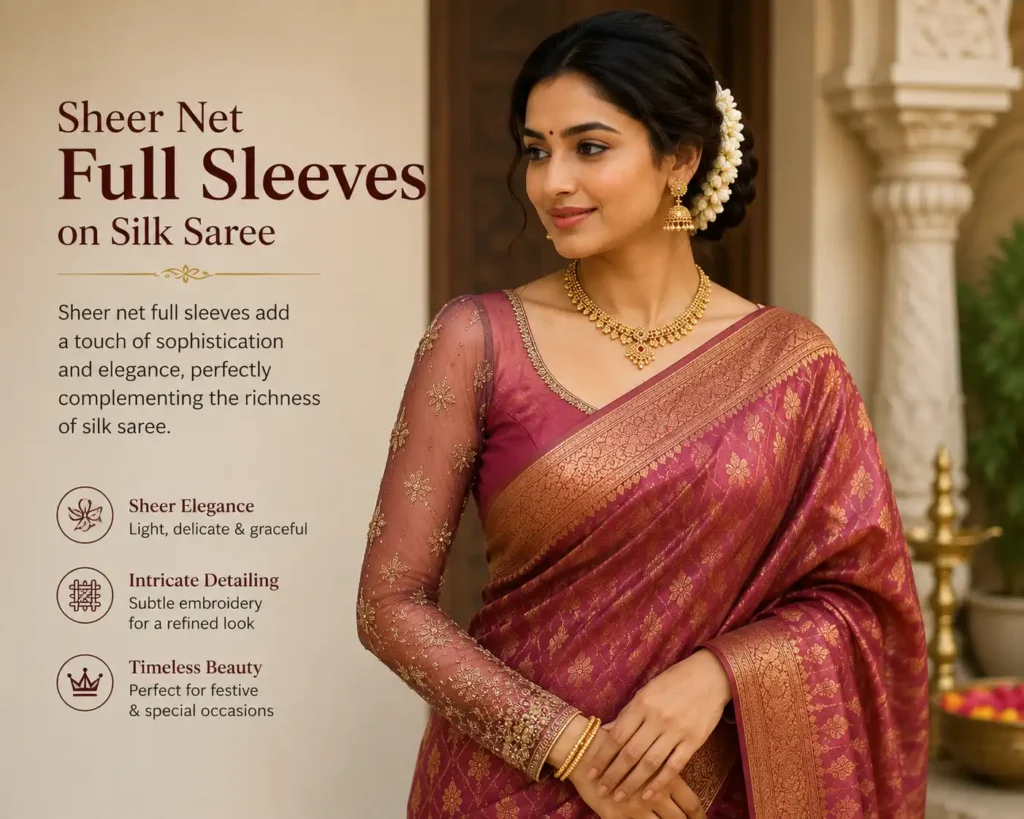
Sheer sleeves provide coverage without the visual weight of solid silk. Choose soft net in the same colour as the blouse and finish it with silk cuffs, scattered embroidery, or small motifs.
Use good-quality net that does not scratch the skin. The tailor should also strengthen the armhole seam so that the delicate material does not tear. Avoid rough stones or beads that could catch the saree’s pallu.
9. Maggam or Aari Work Elbow Sleeves
Elbow sleeves provide enough surface for traditional Maggam or Aari work. Instead of filling the entire sleeve, select one clear theme such as peacocks, floral vines, temple jewellery motifs, or decorative cuffs.
This makes the handwork visible while preventing it from overpowering the saree. For a coordinated appearance, repeat a motif or colour already present in the saree’s border.
10. Cutwork Sleeves
Cutwork creates small open areas along the sleeve edge or within an embroidered motif. It can make a plain raw-silk blouse look detailed and refined.
Keep the cut sections away from high-tension points, including the underarm and elbow. Ask for clean backing and proper edge finishing to prevent fraying. Cutwork is better used as an accent than across the entire sleeve.
11. Scalloped-Edge Sleeves
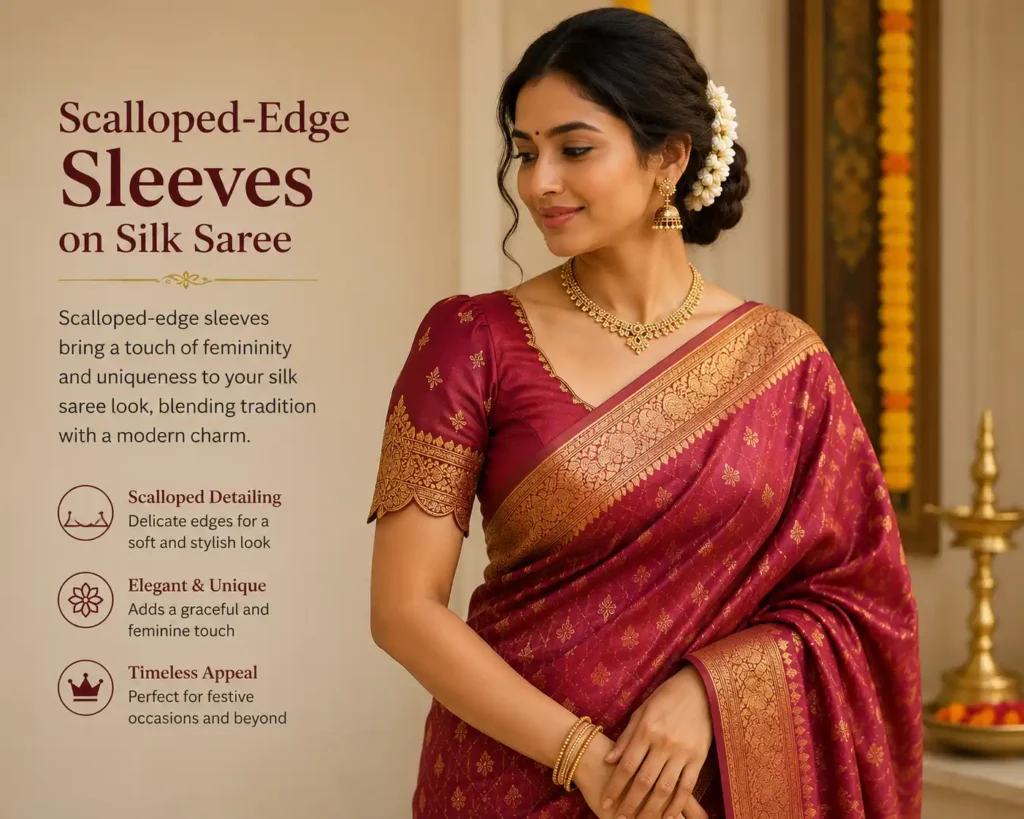
A scalloped sleeve hem gives the blouse a delicate finish without adding volume. Small scallops suit narrow borders, whereas larger scallops can hold threadwork, beads, or contrast piping.
You can repeat the same curve on the neckline or blouse back. However, limit the number of scalloped areas so that the overall blouse design remains balanced.
12. Bell Sleeves
Bell sleeves remain fitted above and flare towards the hem. A short or three-quarter bell sleeve can give a simple silk saree a contemporary mood.
Use silk organza, tissue, or another lightweight contrast material for the flared section. Thick fabric may stand out awkwardly instead of falling softly. Since the sleeve already creates volume, keep the neckline and blouse body relatively simple.
13. Petal or Tulip Sleeves
Petal sleeves use overlapping fabric sections that resemble flower petals. They add shape without requiring heavy embroidery and are comfortable for daytime celebrations.
Contrast piping can highlight the overlapping sections, while matching piping produces a quieter finish. During the blouse trial, lift your arms to confirm that the overlap remains secure and provides sufficient coverage.
14. Contrast Brocade Sleeves
Contrast brocade sleeves are useful when the original blouse piece is plain, insufficient, or unavailable. Pick one colour from the saree’s border or motifs instead of introducing an unrelated shade.
A solid-colour blouse body with brocade sleeves can also be reused with several sarees if the colour palette is versatile. Antique gold, maroon, green, navy, and black are common choices, but the final shade must complement the saree.
15. Temple-Border Sleeve Design
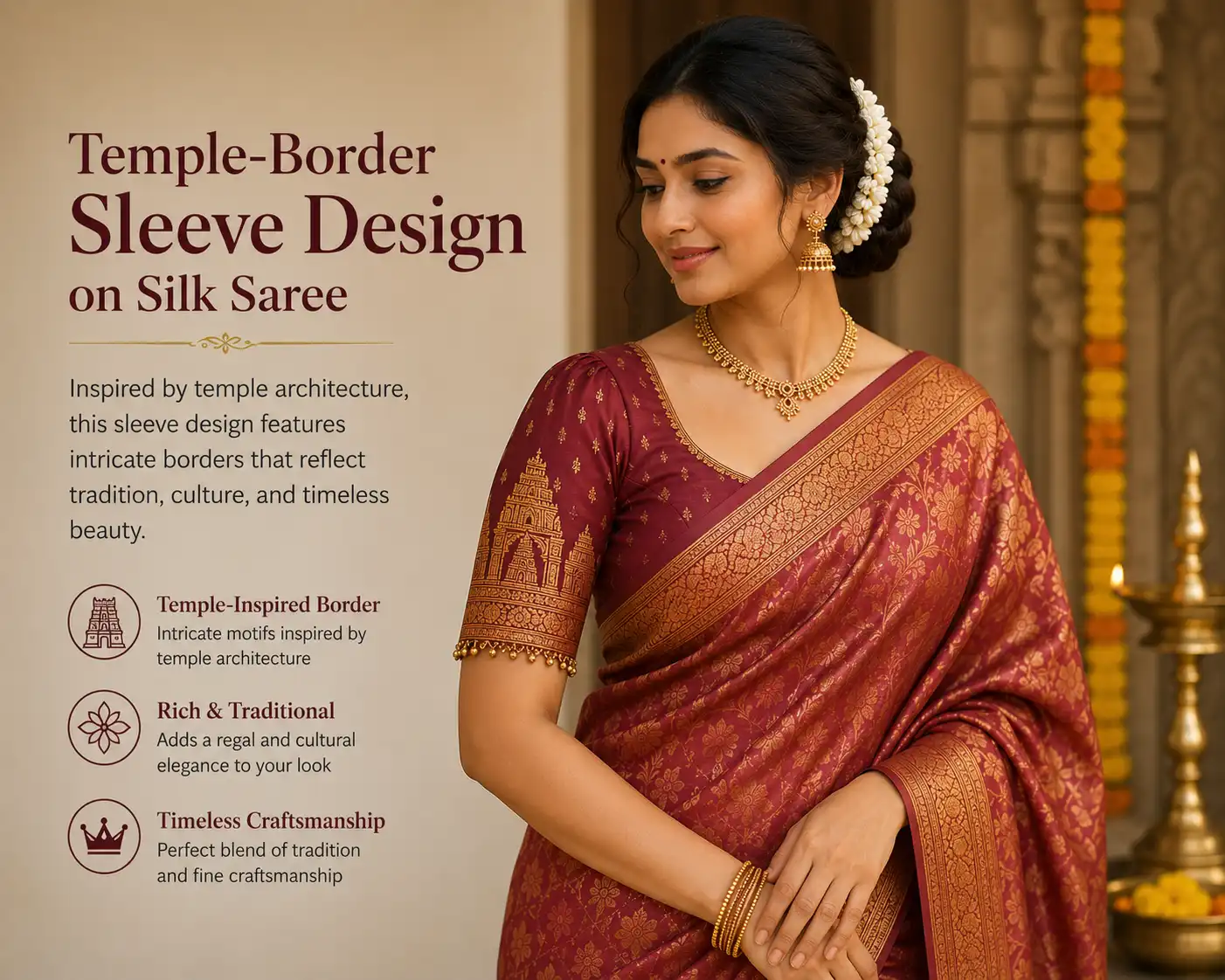
Temple borders feature repeated triangular or architectural shapes that naturally create a strong sleeve edge. Place the pattern evenly and let it remain the main decorative detail.
This sleeve design looks appropriate with traditional jewellery, jasmine flowers, and neatly draped Kanjeevaram or South Indian silk sarees. Plain elbow-length sleeves usually provide the best surface for displaying the temple pattern clearly.
Which Sleeve Design Suits Each Type of Silk Saree?
There are no compulsory pairing rules. However, the following combinations usually create a balanced result.
| Silk saree type | Suitable sleeve designs | Why they work |
|---|---|---|
| Kanjeevaram or pattu | Short border, elbow-length, puff and Maggam-work sleeves | They complement strong zari borders and a structured drape |
| Banarasi silk | Elbow-length, three-quarter, full fitted and contrast brocade | These designs echo the saree’s rich woven surface |
| Mysore or soft silk | Short, petal, small puff and plain elbow sleeves | Lighter details preserve the saree’s fluid appearance |
| Paithani | Border sleeves, elbow-length Aari work and controlled puff | They highlight traditional colours and woven motifs |
| Tussar or raw silk | Three-quarter, scalloped, cutwork and contrast sleeves | Texture and clean details suit the fabric’s natural character |
| Silk organza | Sheer full, bell and petal sleeves | Lightweight details work with the saree’s airy structure |
How to Choose the Right Sleeve Length
Choose a length by considering comfort and visual balance rather than following rigid body-shape rules.
Short and cap sleeves keep the blouse light and work well in warm weather. Elbow-length sleeves offer coverage and enough room for decorative work. Three-quarter sleeves create a continuous vertical line, while full sleeves provide the most formal finish.
If you prefer less volume around the shoulder, select straight elbow or three-quarter sleeves. For more structure, try a small puff or petal sleeve. Keep decorative details controlled on a petite frame, and let comfort remain the deciding factor for every body type.
Match the Sleeves to the Occasion
For weddings, elbow-length Maggam work, cutwork, full fitted sleeves, and rich border sleeves photograph well. Brides should plan the sleeves with their bangles, armlets, and pallu placement before stitching.
For festivals and family ceremonies, short border, puff, and plain elbow sleeves feel traditional. For receptions and evening parties, sheer, scalloped, or bell sleeves create a contemporary finish.
For office events or daytime gatherings, choose plain short, elbow, or three-quarter sleeves with minimal piping. They look neat and allow easy movement.
Important Tailoring Tips for a Better Fit
Use this checklist before the blouse is completed:
- Measure both arms instead of assuming they are identical.
- Take the upper-arm measurement with the muscles relaxed. Then check movement by bending and lifting the arm.
- Ask for suitable wearing ease. Most silk fabrics have very little stretch, so sleeves should not depend on the fabric expanding.
- Use breathable lining where possible, especially for long or heavily embroidered sleeves.
- Check the border direction, motif position, and symmetry before the fabric is cut.
- Reinforce delicate net, cutwork, and heavily embellished areas.
- Test the blouse with the intended undergarments because they can change the final fit.
- Request a trial before final seam finishing, particularly for bridal, full-sleeve, or high-value blouses.
- Rub the finished sleeve lightly against the saree to ensure that stones, hooks, and beads do not snag the pallu.
Silk can fray and show needle marks, so a basted trial is safer than altering a tight finished sleeve.
Colour and Embroidery Rules for a Balanced Look
A matching blouse creates a continuous traditional appearance. For a reliable contrast, select a shade already present in the border, pallu, or motifs. The final colour should also suit the saree’s undertone.
Use one dominant feature. Pair dense zari with clean border or cuff sleeves. On a plain saree, the sleeves can carry embroidery, cutwork, or texture. Repeating one saree motif usually looks more cohesive than mixing unrelated patterns.
If you want a blouse that can be reused, choose a versatile base colour and limit highly specific motifs. A well-fitted brocade blouse with clean elbow-length sleeves can work with several silk sarees.
Common Mistakes to Avoid
Do not copy a sleeve from a photograph without adapting it to your fabric and measurements. Avoid a tight upper arm, heavy embellishment beneath the pallu, scratchy net, oversized puffs in stiff fabric, and cuffs that clash with bangles.
Also avoid combining borders, stones, embroidery, tassels, and contrast fabric on one sleeve. One or two carefully finished details usually look more refined.
Most importantly, do not skip the blouse trial. Test whether you can raise your arms, bend your elbows, handle the pallu, and sit comfortably before the tailor closes the seams.
Frequently Asked Questions
Elbow-length sleeves with a narrow or broad saree border are among the most versatile choices. They suit traditional silk, provide useful coverage, and offer space for embroidery. However, a plain short sleeve may be better when the saree itself is heavily woven.
Short sleeves with the original border, elbow-length sleeves, small puff sleeves, and Maggam-work sleeves complement Kanjeevaram sarees. Choose only one strong feature so that the blouse supports the saree’s zari work rather than competing with it.
Yes. Plain silk, brocade, and soft net can all be used for full sleeves. Ensure that the elbow has enough ease, the lining feels comfortable, and any embroidery does not make the sleeve too heavy. Full sleeves are especially suitable for formal and evening occasions.
Choose a versatile colour taken from your saree collection and use restrained brocade, zari piping, or a neutral border. Plain elbow or three-quarter sleeves are easier to repeat than highly specific motifs. Carry saree swatches or clear photographs when selecting the blouse fabric.
Final Thoughts
The best silk saree blouse sleeves design combines beauty with movement, proportion, and careful finishing. Start with the saree’s border and fabric weight, decide how much detail the occasion requires, and then adapt the design to your comfort.
A clean sleeve that fits well will usually look more elegant than an elaborate sleeve that pulls, scratches, or overwhelms the saree.