
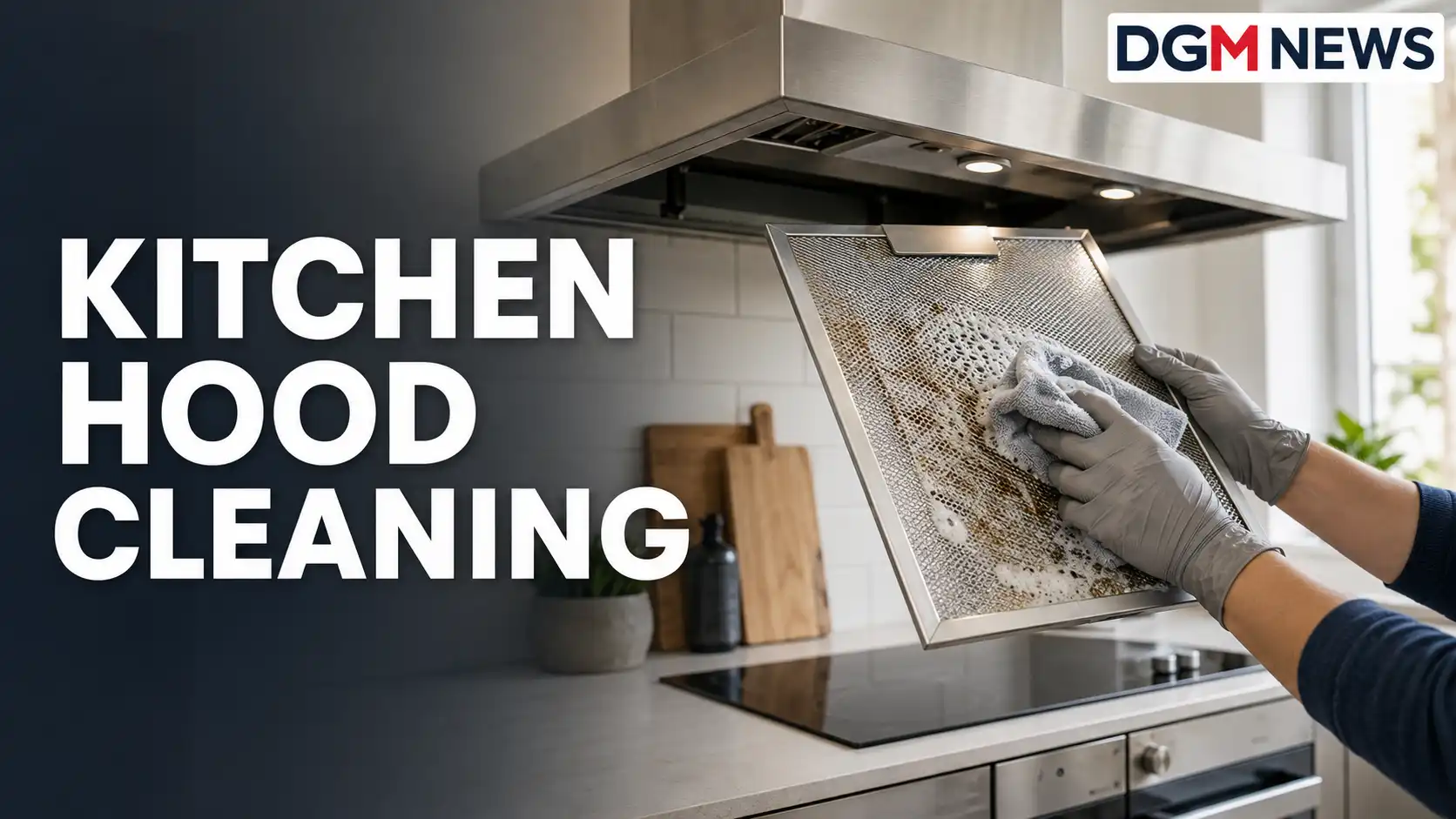

A kitchen hood works quietly above the cooktop, collecting airborne grease, smoke and cooking particles before they spread through the room. However, much of that grease eventually settles on the hood’s filters, underside and surrounding surfaces.
When this buildup is ignored, the hood may become noisier, capture less smoke and leave cooking smells in the kitchen for longer. Grease can also begin dripping from an overloaded filter.
Effective kitchen hood cleaning involves more than polishing the visible surface. You need to identify the filter type, clean the correct components and protect the motor, controls and finish from moisture or harsh chemicals. The following method works for most household range hoods, extractor hoods and chimney-style hoods, but the appliance manual should always take priority.
Identify Your Hood and Filter Before Cleaning
The cleaning method depends on whether the hood sends air outdoors or recirculates it into the kitchen.
| Hood configuration | Filters normally present | Required maintenance |
|---|---|---|
| Ducted or externally vented | Aluminum mesh or stainless-steel baffle filter | Wash the reusable grease filter |
| Ductless or recirculating | Metal grease filter plus activated charcoal filter | Wash the metal filter and replace the charcoal filter |
| Convertible hood | Depends on how the appliance was installed | Check the actual installation and user manual |
Metal mesh filters contain several thin layers that trap grease. Baffle filters use angled metal panels to separate grease from the moving air. Both types are usually reusable, although the approved washing method varies between manufacturers.
Activated carbon or charcoal filters absorb odors in recirculating hoods. Most standard charcoal filters cannot be washed because water does not restore the saturated carbon. Bosch advises replacing standard carbon filters rather than cleaning them, while replacement frequency depends on the model and cooking habits.
If you cannot identify the filter, find the model number inside the hood or behind the removable grease filter. Search for the manufacturer’s manual before proceeding.
What You Need for Kitchen Hood Cleaning
Prepare the following basic supplies:
- Protective gloves
- Two or three microfiber cloths
- Mild dishwashing liquid
- Warm or hot water
- A soft nylon brush
- A basin or sink large enough for the filter
- Dry towels
- A manufacturer-approved degreaser for stubborn deposits
Avoid steel wool, hard scrapers, abrasive powders and oven cleaner unless the hood manufacturer specifically approves them. Aggressive acidic, alkaline or chlorine-based cleaners can stain metal, damage coatings or remove printed control markings. Never combine different cleaning chemicals.
How to Clean a Kitchen Hood Step by Step
1. Switch Off the Hood and Let It Cool
Turn off the cooktop, hood fan and hood lights. Wait until the cooking surface and lamps are completely cool. Disconnect the hood from power by unplugging it or switching off the appropriate circuit breaker when it is safe and practical to do so.
Cover the cooktop with an old towel after it has cooled. This protects the surface from grease, water and accidental scratches. Keep cleaning liquid away from switches, light sockets, fan openings and other electrical components.
2. Remove the Grease Filters Carefully
Support the filter with one hand while releasing its latch or retaining clip. A heavily loaded filter may contain liquid grease, so keep it level while lowering it.
If the hood contains several filters, take a photograph before removal. The image will help you remember their direction and position. Do not bend an aluminum mesh filter or press it against the sink, as damaged mesh may not fit securely when reinstalled.
Check behind the metal filter for a separate carbon filter. Remove it only according to the manufacturer’s instructions.
3. Wash Reusable Metal Filters
Begin by reading the manual. Some manufacturers allow soaking, while certain models specify immediate washing without a prolonged soak.
For handwashing, fill a sink or basin with hot—but not boiling—water and add a small amount of grease-cutting dishwashing liquid. If the manual permits soaking, leave the filter in the solution for approximately 10 to 20 minutes. This softens the greasy film without requiring excessive scrubbing.
Brush both sides gently with a soft nylon brush. Pay attention to the corners, frame and spaces between baffle plates. Avoid using sharp objects to clear the mesh because they can puncture or separate its layers.
Rinse the filter thoroughly until the water runs clear and no detergent remains. Stand it upright on a towel and allow it to dry completely.
A dishwasher may be suitable for some all-metal filters, but it is not automatically safe for every filter. Confirm the method in the appliance manual. If approved, wash the filter separately from dishes, use the recommended temperature and choose a suitable detergent. Aluminum may become dull or discoloured in a dishwasher, although this does not necessarily affect performance. Broan-NuTone, for example, recommends a non-phosphate detergent for dishwasher-safe all-metal filters.
4. Replace Standard Charcoal Filters
Do not put a disposable charcoal filter in the sink or dishwasher. Washing can damage the material without restoring its odor-absorbing capacity.
Replacement intervals differ. Many manufacturers recommend replacing standard charcoal filters roughly every three to six months, depending on usage. Frequent frying, grilling and spice-heavy cooking may shorten that period. Light cooking may allow a longer interval if the manual permits it.
Some premium hoods use regenerable or long-life carbon filters. These are exceptions and may have special oven-regeneration instructions. Treat a filter as washable or regenerable only when its product documentation clearly says so.
5. Clean the Hood’s Exterior
Use a fresh microfiber cloth dampened with mild soapy water. Apply cleaner to the cloth instead of spraying it directly onto the hood. Direct spraying can push moisture into buttons, display panels and seams.
For stainless steel, wipe in the direction of the visible grain. Follow with a clean damp cloth to remove soap, then dry the surface immediately to reduce streaks and water marks. Use stainless-steel polish only when it is approved for the appliance.
Painted, powder-coated and black stainless-steel surfaces usually need nothing stronger than mild soap and a soft cloth. Abrasive pads and metal polish can permanently alter their appearance.
For glass panels, use a product approved by the manufacturer. Apply it to the cloth and keep excess liquid away from the panel edges, control area and light fittings.
Clean touch controls and printed labels with a barely damp cloth. Do not scrub them or apply stainless-steel conditioner over the markings.
6. Wipe the Underside and Accessible Interior
Grease often collects around the filter frame and on the lower lip of the hood. Wipe these accessible areas with mild soapy water, followed by a clean damp cloth.
Never pour water into the hood or spray degreaser towards the motor. Do not reach into the blower assembly, remove wiring covers or dismantle the fan unless the user manual provides a specific owner-maintenance procedure.
If you find thick grease inside inaccessible sections of the blower or duct, arrange professional cleaning rather than attempting to disassemble the appliance.
7. Reinstall and Test the Hood
Reinstall only completely dry filters. Make sure every latch is fully engaged and that the filter sits flat without gaps.
Restore the power and test the hood at each fan speed. Listen for rattling or vibration, which may indicate that a filter has been installed incorrectly. Check the lights and reset the filter-maintenance indicator if your model has one.
How to Remove Hardened Grease Safely
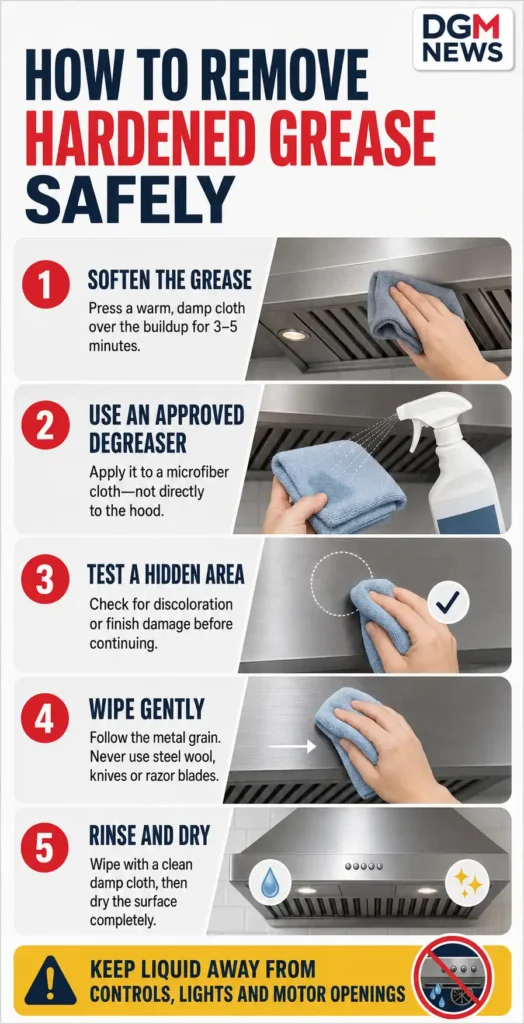
Old grease often forms a sticky, amber-coloured layer that normal wiping cannot remove. Start by holding a warm, damp cloth against the deposit for several minutes. This softens the residue and reduces the need for force.
If grease remains, place a small amount of manufacturer-approved degreaser on a cloth and test it on an inconspicuous area. Follow the product’s contact-time instructions, wipe away the residue and remove any remaining cleaner with a damp cloth.
Do not scrape the hood with a knife, razor blade or metal tool. These methods can scratch stainless steel, remove paint and damage protective coatings. Popular mixtures containing vinegar or baking soda should not be treated as universally safe. Acids can affect some finishes, while undissolved powders may act as abrasives.
How Often Should a Kitchen Hood Be Cleaned?
There is no single interval for every household. Cooking frequency, food type, fan use and filter design all affect how quickly grease accumulates.
A practical starting schedule is:
- Wipe fresh splashes from the exterior and underside after heavy cooking.
- Clean the exterior approximately once a week in an active kitchen.
- Inspect the grease filter every two weeks.
- Wash reusable metal filters about once a month under normal use.
- Clean filters sooner if you regularly fry, grill, sear or cook with a wok.
- Replace standard charcoal filters according to the manual, commonly every three to six months.
Manufacturer guidance must override a general schedule. For example, Broan-NuTone recommends approximately monthly washing for many aluminum mesh filters, while individual Bosch manuals may specify at least once every two months. The condition of your filter is often more useful than the calendar.
Signs That Cleaning Is Overdue
Clean or inspect the hood when you notice:
- Sticky grease on the underside
- A dark, tacky or clogged metal filter
- Smoke escaping around the hood
- Cooking smells that remain for longer than usual
- Reduced airflow at a familiar fan setting
- Increasing fan noise
- Grease droplets around the filter frame
- A filter warning light on the control panel
Cleaning a blocked filter may improve airflow, but it cannot repair a weak motor or clear an obstructed duct.
Kitchen Hood Cleaning Mistakes to Avoid
The most common mistake is treating every filter in the same way. A reusable metal filter can usually be washed, while a standard charcoal filter must normally be replaced.
Other mistakes include reinstalling a damp filter, spraying cleaner into controls, using abrasive pads on stainless steel and placing an unapproved filter in the dishwasher. Operating the hood without its grease filter is also unsafe because grease can enter the blower and ductwork.
Do not add paper, fabric or foil liners unless the manufacturer designed the hood for them. An improvised liner can restrict airflow or create an additional fire hazard.
Finally, avoid assuming that every performance problem is caused by dirt. Persistent rattling, electrical smells, sparking, repeated breaker trips or a fan that fails to start requires professional attention.
When Professional Cleaning or Repair Is Necessary
Contact a qualified technician when grease has reached inaccessible motor components, the filter will not lock securely or airflow remains weak after cleaning. You should also seek help if the duct appears blocked, the hood makes grinding noises or there are signs of electrical damage.
Commercial kitchen extraction systems require specialised inspection and cleaning because grease can accumulate throughout long duct runs. A household cleaning routine is not a substitute for the fire-safety procedures required for commercial premises.
A Simple Routine That Prevents Heavy Buildup
Heavy cleaning becomes less necessary when grease is removed before it hardens. After the hood has cooled, wipe fresh splashes from the underside and front edge. Inspect the filter during the weekly kitchen clean and wash it as soon as the mesh becomes tacky.
Record the date whenever you replace a charcoal filter. Keeping the correct replacement filter number in your phone can also prevent delays when the next change is due.
Frequently Asked Questions
Only if the manufacturer identifies it as dishwasher-safe. Charcoal filters should not go in the dishwasher. Even approved aluminum filters may discolour, so check the manual before using this method.
Warm water and mild grease-cutting dish soap are suitable for many reusable metal filters and hood surfaces. Use a manufacturer-approved degreaser for stubborn deposits.
A recirculating hood may need a new charcoal filter. Lingering smells can also result from weak airflow, incorrect fan use, a blocked duct or grease hidden inside inaccessible components.
It can improve airflow when grease is blocking the filter. If performance remains poor after cleaning and correct reinstallation, the duct, outlet flap, blower or installation may need inspection.
Clean them only when the manufacturer’s instructions provide safe access and a specific procedure. Otherwise, leave internal blower cleaning to a qualified technician.
Final Takeaway
Proper kitchen hood cleaning protects both the appliance and the surrounding kitchen. Identify the filter first, wash reusable metal components gently, replace standard charcoal filters and keep liquids away from electrical parts. Regular light cleaning is safer and easier than allowing grease to develop into a thick, hardened layer.