
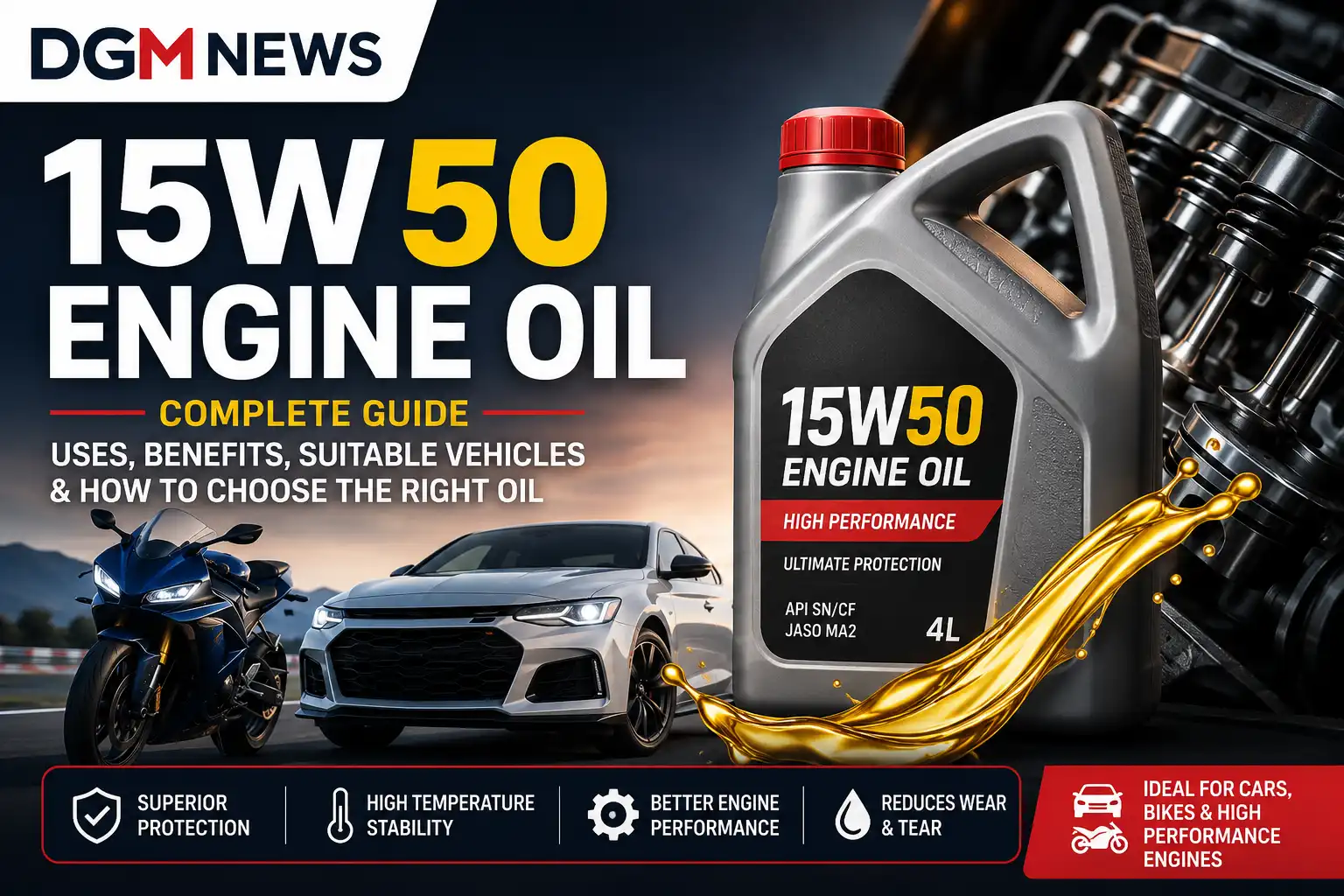

Engine oil plays a critical role in protecting an engine from wear, overheating, sludge formation, and corrosion. Among the many viscosity grades available, 15W50 engine oil is widely used in motorcycles, performance cars, classic vehicles, and heavy-duty applications where higher operating temperatures or demanding riding conditions require stronger lubrication.
If you are planning to switch to this oil grade, it is important to understand where it works best, when it should be avoided, and how it compares with other engine oils.
This guide explains everything you need to know about 15W50 engine oil, including its meaning, advantages, disadvantages, applications, maintenance tips, and frequently asked questions.
What Is 15W50 Engine Oil?
15W50 engine oil is a multigrade lubricant designed to provide reliable engine protection across a broad temperature range.
The viscosity rating follows the SAE (Society of Automotive Engineers) classification.
- 15W represents the oil’s viscosity during cold starts (“W” stands for Winter).
- 50 indicates the oil’s viscosity when the engine reaches normal operating temperature.
Compared to thinner oils such as 5W30 or 10W30, 15W50 remains significantly thicker at high temperatures. This thicker oil film helps protect engine components that operate under high loads or elevated temperatures.
Understanding the 15W50 Viscosity Rating
| Rating | Meaning |
|---|---|
| 15W | Good cold-start performance in moderate climates |
| 50 | Thick protective film at high engine temperatures |
| Multigrade | Performs in both cold and hot operating conditions |
The higher hot viscosity makes this oil particularly suitable for engines that experience:
- High-speed highway driving
- Heavy towing
- Performance riding
- Long-distance touring
- Hot weather operation
- Older engines with larger internal clearances
How Does 15W50 Engine Oil Work?
Modern engine oil performs much more than lubrication.
A quality 15W50 engine oil helps to:
- Reduce metal-to-metal contact
- Prevent excessive engine wear
- Carry heat away from moving parts
- Minimize sludge formation
- Protect against corrosion
- Clean engine deposits
- Improve sealing between piston rings and cylinder walls
- Reduce oxidation at high temperatures
These functions contribute to improved engine reliability and longer service life when the oil grade matches the manufacturer’s recommendation.
Key Features of 15W50 Engine Oil
High-temperature stability makes this oil suitable for demanding operating conditions.
Its main characteristics include:
- Excellent thermal resistance
- Strong lubricating film
- Better wear protection
- High oxidation resistance
- Good shear stability
- Reduced oil breakdown
- Improved protection during long rides
- Suitable for performance engines
Premium synthetic versions also provide better deposit control and cleaner engine operation.
Where Is 15W50 Engine Oil Commonly Used?
This oil is not designed for every vehicle.
It is commonly recommended for:
Performance Motorcycles
Many sports bikes and touring motorcycles specify 15W50 because motorcycle engines often operate at higher RPMs and temperatures.
Examples include:
- High-performance motorcycles
- Adventure bikes
- Touring motorcycles
- Air-cooled motorcycles
Always check the owner’s manual before choosing any oil grade.
Sports Cars
Certain naturally aspirated and turbocharged performance cars benefit from thicker oil under demanding driving conditions.
Typical applications include:
- Track-day vehicles
- High-performance engines
- Modified engines
- Sports sedans
Classic Vehicles
Older engines often have larger internal clearances due to age and wear.
A thicker oil such as 15W50 can help maintain oil pressure and reduce oil consumption in some older engines.
Heavy-Duty Applications
Vehicles operating under continuous heavy loads may also use this viscosity if recommended by the manufacturer.
Examples include:
- Commercial equipment
- Agricultural machinery
- Industrial engines
- Utility vehicles
Advantages of 15W50 Engine Oil
Choosing the correct oil can improve engine durability.
Some major benefits include:
Excellent High-Temperature Protection
The thicker viscosity maintains a strong lubricating film even when the engine operates under extreme heat.
Better Wear Resistance
Critical engine components such as:
- Camshafts
- Bearings
- Pistons
- Connecting rods
receive additional protection during demanding operation.
Suitable for High Mileage Engines
Older engines sometimes consume thinner oils more quickly.
A thicker viscosity may reduce oil consumption in engines experiencing normal age-related wear.
Stable Oil Pressure
Many high-performance engines require stable oil pressure under heavy acceleration.
15W50 helps maintain consistent lubrication.
Better Protection During Long Trips
Long highway drives generate significant engine heat.
This oil is designed to remain stable under prolonged operation.
Disadvantages of 15W50 Engine Oil
Although highly effective in certain situations, this oil is not ideal for every vehicle.
Potential drawbacks include:
Reduced Cold Weather Performance
Very cold climates require thinner oils for easier circulation during startup.
Lower Fuel Efficiency
Because it is thicker, the engine may experience slightly higher internal resistance.
Not Suitable for Many Modern Passenger Cars
Many modern engines are designed for:
- 0W20
- 5W20
- 5W30
- 0W30
Using a thicker oil than recommended can negatively affect performance.
Possible Warranty Issues
Using an oil viscosity that differs from the manufacturer’s specification may affect warranty coverage.
Always follow the owner’s manual.
15W50 Engine Oil vs Other Common Oil Grades
| Oil Grade | Cold Start | High Temperature Protection | Typical Use |
| 5W30 | Excellent | Moderate | Modern passenger cars |
| 10W40 | Good | Good | Daily driving and motorcycles |
| 15W50 | Moderate | Excellent | Performance, touring and older engines |
| 20W50 | Fair | Excellent | Vintage engines and very hot climates |
The correct choice depends on the engine design rather than personal preference.
Synthetic vs Semi-Synthetic vs Mineral 15W50 Engine Oil
Fully Synthetic
Benefits include:
- Better thermal stability
- Longer oil life
- Improved cleaning performance
- Superior oxidation resistance
- Better engine protection
Best suited for:
- Performance motorcycles
- Sports vehicles
- Premium engines
Semi-Synthetic
Provides a balance between price and performance.
Suitable for:
- Daily motorcycles
- Moderate usage
- Mixed riding conditions
Mineral Oil
Offers basic lubrication but generally requires shorter oil change intervals.
Often used in:
- Older motorcycles
- Vintage engines
- Budget maintenance
Is 15W50 Engine Oil Suitable for Your Vehicle?
Before changing engine oil, verify three important factors.
1. Manufacturer Recommendation
Always follow the viscosity listed in:
- Owner’s manual
- Service manual
- Manufacturer maintenance guide
2. Climate
15W50 performs well in:
- Warm climates
- Moderate temperatures
- Hot summers
Very cold regions may require thinner winter oils.
3. Driving Style
This viscosity is often preferred for:
- Aggressive riding
- High-speed driving
- Mountain roads
- Long-distance touring
- Heavy loads
Can You Use 15W50 Instead of 10W40?
Some riders consider switching from 10W40 to 15W50.
The answer depends entirely on the manufacturer’s recommendation.
Switching may be appropriate when:
- Operating in hotter climates
- Riding under heavy loads
- Manufacturer approves both grades
However, using thicker oil without approval can reduce lubrication efficiency during cold starts.
Can You Mix 15W50 With Other Engine Oils?
Mixing engine oils should generally be avoided unless absolutely necessary.
Although most modern oils are chemically compatible, mixing different:
- Viscosity grades
- Additive packages
- Oil technologies
may reduce overall performance.
A complete oil change is always the better option.
How Often Should 15W50 Engine Oil Be Changed?
Oil change intervals depend on several factors.
These include:
- Oil type
- Engine condition
- Riding style
- Manufacturer schedule
- Driving environment
General guidelines:
| Oil Type | Typical Change Interval |
| Mineral | 3,000–5,000 km |
| Semi-Synthetic | 5,000–7,500 km |
| Fully Synthetic | 8,000–12,000 km (or as recommended) |
Always follow the vehicle manufacturer’s maintenance schedule.
Signs Your Engine Oil Needs Replacement
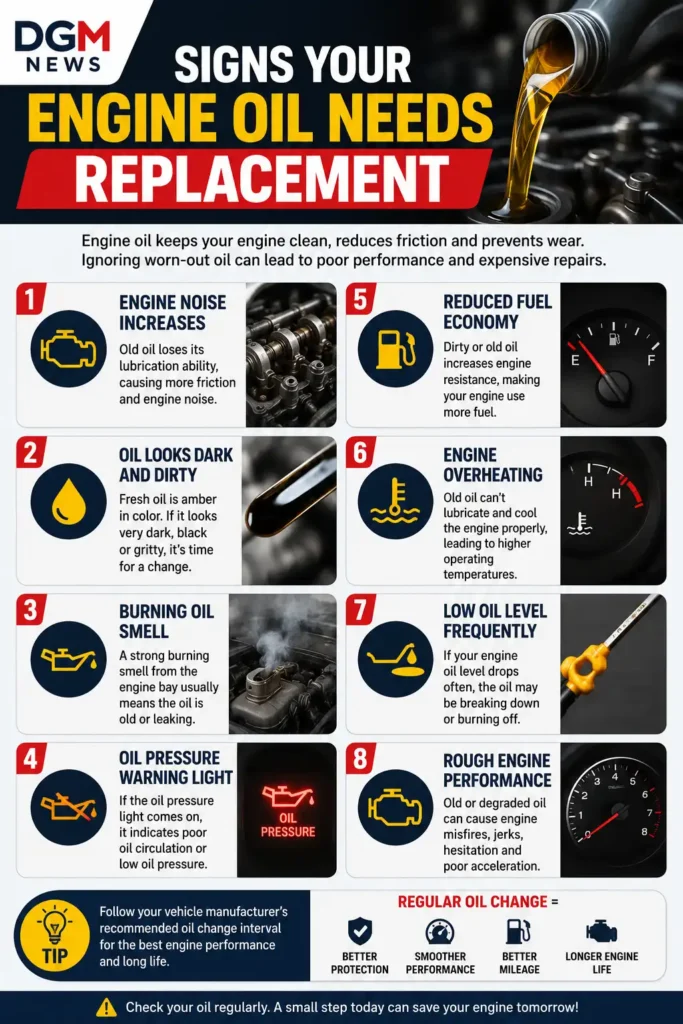
Watch for these warning signs:
- Engine noise increases
- Oil appears excessively dark
- Burning oil smell
- Reduced fuel economy
- Low oil level
- Dashboard oil warning light
- Engine overheating
- Rough engine performance
Ignoring these symptoms can lead to expensive engine repairs.
Tips for Getting the Best Performance From 15W50 Engine Oil
Follow these best practices:
- Use the viscosity recommended by the manufacturer.
- Replace the oil filter during every oil change.
- Check oil level regularly.
- Avoid mixing different oil types.
- Purchase oil from trusted retailers.
- Follow scheduled maintenance intervals.
- Inspect for oil leaks periodically.
- Keep service records for future reference.
Common Myths About 15W50 Engine Oil
Myth 1: Thicker Oil Is Always Better
Reality: The correct viscosity depends on engine design.
Myth 2: Synthetic Oil Causes Engine Leaks
Reality: Synthetic oil does not create leaks. It may simply expose existing worn seals.
Myth 3: Engine Oil Never Expires
Reality: Oil degrades over time due to heat, oxidation, and contamination.
Myth 4: All 15W50 Oils Perform the Same
Reality: Product quality varies depending on base oil, additive technology, and industry certifications.
How to Choose the Best 15W50 Engine Oil
Before purchasing, check:
- SAE viscosity rating
- API service classification
- ACEA specification (if applicable)
- JASO certification for motorcycles
- Manufacturer approvals
- Synthetic or mineral formulation
- Manufacturing date
- Authentic packaging
Selecting an oil that meets your vehicle manufacturer’s specifications is more important than choosing a well-known brand alone.
Frequently Asked Questions
Yes. Many premium motorcycles, touring bikes, and performance motorcycles recommend this viscosity. Always verify the owner’s manual.
It can perform in moderate winters, but vehicles operating in very cold climates may require thinner oil grades specified by the manufacturer.
When it matches the manufacturer’s recommendation and maintenance schedule, it can provide excellent wear protection and contribute to long engine life.
Most modern passenger cars are designed for lower-viscosity oils. Using 15W50 without manufacturer approval is generally not recommended.
Fully synthetic oil usually offers superior heat resistance, oxidation stability, engine cleanliness, and longer service intervals.
Final Thoughts
15W50 engine oil is an excellent choice for engines that operate under high temperatures, heavy loads, or demanding riding conditions. It offers strong high-temperature protection, improved wear resistance, and reliable lubrication for performance motorcycles, sports cars, classic vehicles, and selected heavy-duty applications.
However, choosing engine oil should never be based solely on popularity or viscosity. The safest approach is to use an oil that meets your vehicle manufacturer’s recommended viscosity grade and required industry specifications, such as API, ACEA, or JASO. Following the correct maintenance schedule and using high-quality oil will help maximize engine performance, reliability, and longevity over the long term.